
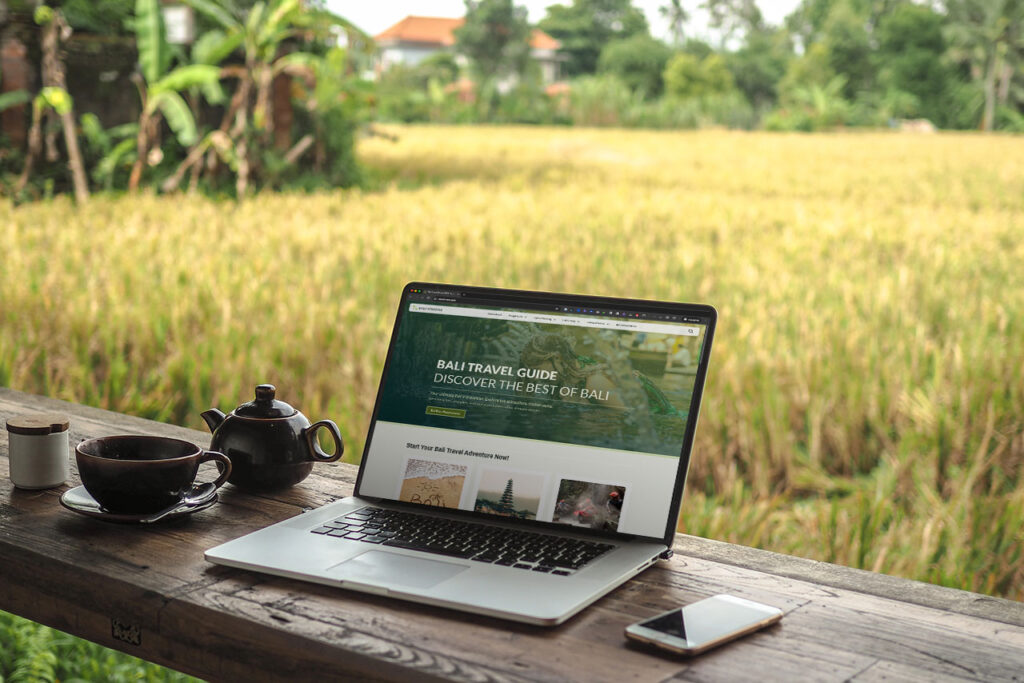
Bali is still one of the best places for remote work. You’ll find fast internet in most spots, rent is way cheaper than back home, and there’s a big coworking scene. Plus, the weather means you can surf before your morning calls if you want.
But Bali is big, and where you stay changes your day-to-day life. Living in Canggu is totally different from Ubud. Sanur feels like a whole other island compared to Seminyak.
We’ll walk you through four of the main areas (Bali region) for remote workers, and share some good places to stay for each area. All of these have real desks, solid WiFi, and you can usually get a better deal if you’re staying longer.
We’ll cover different budgets in each area, so there’s something for everyone, whether you’re spending $20 or $200 a night.
What makes a Bali stay nomad-friendly
Just so you know, not every hotel or villa is great for remote work, even if it looks nice in photos. Here’s what to look for:
- A real desk or table — not a tiny vanity with a hotel lamp
- Fast, stable WiFi — if they don’t list the speed, just ask the property directly. Anything above 25 Mbps is fine, 50+ is better if you do a lot of video calls
- Quiet enough for calls — if there’s a pool party next door, your Zoom meeting may not go well.
- Good AC — Bali humidity is not fun, and you don’t want to be sweating all over your laptop
- Monthly rates — most small properties will give you 20 to 40 percent off if you stay a week or longer. Just ask. Booking.com sometimes hides these deals, so send a direct message
- Kitchen or easy food access — having a warung nearby is more usefull than a fancy hotel kitchen you’ll never use
Quick Compare: Canggu vs Ubud vs Sanur vs Seminyak
Canggu
- Vibe: High-energy, beach + cafe scene
- Monthly rent USD: $600 to $1,500 for a private 1BR
- Best for: Nomad community, networking
- Coworking density: Highest
Ubud
- Vibe: Quiet, jungle, wellness
- Monthly rent USD: $500 to $1,200 for a private 1BR
- Best for: Focus work, writers, long-haul founders
- Coworking density: Medium
Sanur
- Vibe: Chill, beachfront, family-friendly
- Monthly rent USD: $400 to $1,000 for a private 1BR
- Best for: Long-term stability, sane schedules
- Coworking density: Low but growing
Seminyak / Legian
- Vibe: Polished, walkable, nightlife-adjacent
- Monthly rent USD: $700 to $1,600 for a private 1BR
- Best for: Lifestyle, food scene, airport-close
- Coworking density: Low
Canggu: the big nomad scene
If you’ve heard of any Bali neighborhood for nomads, it’s probably Canggu. Most people start here, and it makes sense. There are coworking spots like Tropical Nomad, TRIBAL, and Kinship Studio, plus loads of cafes with fast WiFi where you can work. You can hit the beach at sunset, go to the gym in the morning, and there’s surfing everywhere.
The downside is the traffic. It’s getting worse every year. Riding a scooter from Berawa to Echo Beach during busy times isn’t fun, and it’s noisy. If you need peace and quiet to focus, Canggu can feel a bit overwhelming.
Expect to spend $600 to $1,500 a month for a private one-bedroom, and around $25 to $40 a night for short stays in a guesthouse or boutique.
Budget pick: Rimbun Canggu Hotel — small, quiet, with a pool, walking distance to the Berawa cafes. Good option if you want to be in Canggu without paying top prices.
Mid-range pick: Masmara Resort Canggu — a boutique resort with nice rooms and a garden pool. Ask about weekly rates.
Upscale pick: The Kirana Canggu Hotel — nicer design, closer to restaurants, worth it if you want to work from your balcony.
Ubud: the quiet focus base
Ubud is pretty much the opposite of Canggu. Think jungle, not beach. Yoga instead of surfing. Vegan cafes instead of smoothie bowls at skate parks. People usually get more focused work done here. Founders, writers, and anyone with a big project often move to Ubud when they’re ready for less partying and more getting things done.
Coworking happens at Outpost Ubud, which has been the main spot for years. If you’re looking at villas out in the jungle, WiFi can get spotty, so always check the speed before you book anything near the rice fields.
Expect $500 to $1,200 a month for a one-bedroom, cheaper if you go further out.
Budget pick: Bumi Ubud Resort — small resort, reasonable rates, rice field views. You’re close enough to central Ubud to get to cafes without a long scooter ride.
Mid-range pick: Hideaway Village Bali Ubud — larger property, more comfortable for a longer stay, price still reasonable.
Upscale pick: Alila Ubud — if you want the classic Ubud jungle experience. This is more expensive, but an authentic Bali experience. Staying a month here with focused work can help you complete your project.
Sanur: the underrated long-stay favorite
Sanur is a good spot if you want something quieter and more laid-back. There’s a long stretch of calm beach, easy bike paths along the water, and real grocery stores nearby. The vibe is relaxed, and you’ll find a steady group of people who live and work here all year. It’s a good place if you want to get things done without a lot of distractions.
Sanur is also one of the more affordable areas, especially for longer stays. You can usually find a private one-bedroom for $400 to $1,000 a month.
If you want to visit other islands like Nusa Penida, Nusa Lembongan, or the Gilis, Sanur is the easiest place to catch a boat. It’s a great base if you want to explore other regions of Indonesia.
Budget pick: Olivia Sanur Workstay Suites — this one’s built for nomads, which is rare. The suites come with real desks, AC, and good WiFi. Starts around $20 a night. It’s a newer spot, so reviews are still coming in, but the setup is made for longer stays. I’d try it for a week first before booking a whole month.
Mid-range pick: Maison Aurelia Sanur — it’s a boutique hotel with good design, quiet rooms. Good choice if you want a comfortable base for longer stays.
Upscale pick: Maya Sanur Resort and Spa — this is a full-service resort right on the beach. If you want to stay somewhere and you don’t have to think about logistics for a month, this is it.
Seminyak and Legian: upscale scene, airport-close
Seminyak feels like Canggu’s older sibling. It feels more polished. The restaurants are nicer, the boutiques are better, and the beach is a bit cleaner. It is also more walkable than Canggu. You won’t find as many coworking spaces, but if you work from cafes or have your own setup, Seminyak is one of the most comfortable places as a Base in South Bali.
Legian is just south of Seminyak. It’s a bit busier and usually a little cheaper. Both areas are close to the airport, which is handy if you’re flying in and out a lot or using Bali as a base for trips around Asia.
For a private one-bedroom in Seminyak, you’re looking at around $700 to $1,600 a month. Legian is usually a bit less.
Budget pick: Olivia SOHO Guest House — around $21 a night, rooms have a desk and balcony, five minutes from the airport, and WiFi access. Not luxury, but it’s a good, honest option if you’re staying for a short time or using Bali as a base between trips.
Mid-range pick: d’primahotel Seminyak — basic but clean, walking distance to Seminyak’s cafe street from here. It’s a good spot if you’re staying for a few weeks.
Upscale pick: Four Points by Sheraton Bali, Seminyak — if you want something a bit more upscale, a real pool and gym. This is a safe bet.
Practical stuff for nomads in Bali
The nomad visa (E33G). Indonesia now has a proper remote worker visa. It lets you stay up to one year, and you can renew it. But you’ll need to show around $60,000 USD in annual income and $2,000 in a bank account over the last three months. Health insurance is also required. Processing is usually 5 to 10 working days. Full breakdown on our Indonesia visa requirements and Bali entry requirements pages.
If you’re staying 30 days or less, you probably don’t need the E33G. A visa on arrival or the B1 visit visa covers most short trips. Just double-check what visa option is available for your nationality before you book your Bali flight.
Monthly rent ranges, summarized.
- Canggu: $600 to $1,500 for a private 1BR
- Ubud: $500 to $1,200
- Sanur: $400 to $1,000
- Seminyak: $700 to $1,600
Don’t forget to budget around $150 to $300 for things like electricity, water, and a scooter rental.
Coworking by area.
- Canggu: Tropical Nomad, TRIBAL (Pererenan), Kinship Studio (Berawa)
- Ubud: Outpost Ubud is the main one
- Sanur: Genesis is the community anchor, plus a few cafe coworking setups
- Seminyak: less formal coworking, but cafes like Revolver and Sisterfields have the vibe
WiFi and data. It’s easier to get an eSIM before you land, so you don’t have to deal with finding for a SIM at the airport. Airalo is a good option for Indonesia eSIM.
Frequently Asked Questions
Which Bali neighborhood is best for digital nomads?
Depends on what you want. Canggu for community and surf, Ubud for focus and nature, Sanur for long-term stability and quieter, Seminyak for food and walkability. If you’re not sure where to start, try Canggu first, then move to Sanur or Ubud once you know what you actually need.
How much does it cost to live in Bali as a nomad per month?
For most people, living in Bali as digital nomad costs around $1,500 to $2,500 per month. That’s private room, food, scooter, coworking, and some weekend activities. You can go lower ($800 to $1,200) if you share housing and eat local. Luxury mode is $3,500 and up.
Can you get monthly rates on Booking.com in Bali?
Sometimes shown, often not. Book a week or two first, then message the property directly about extending at a better rate. Most small guesthouses and boutique hotels will negotiate. Chains usually won’t.
Do you need the nomad visa for a 30-day trip?
No. Visa on arrival works for most nationalities. The E33G visa makes sense if you’re staying three months or longer and want a legal basis for remote work.
Is Sanur really good for digital nomads, or is it too quiet?
It’s quiet on purpose. That’s why long-termers end up there. If you need a party scene, Sanur will frustrate you. If you need a real work routine, it’s the best of the four.
A lof of people pick Bali for Digital Nomad life just because it looks good on Instagram or their friends recommended one. But it’s not for everyone. My advice? Try staying in one area for a week first. If you have more time, that’s even better. Give a month try. That way, you can feel it if it feels right for you or not before you commit.
If you want to know more about working remotely in Bali, check our Digital Nomads in Bali guide. It covers things like visas, coworking spots, internet, costs, and what daily life is actually like in Bali.