
Imagine landing in one of the world’s most visited tropical destinations and finding it completely, utterly quiet. No traffic. No music. No lights. Just the sound of crickets and the wind in the palm trees.
That’s Nyepi – Bali’s “Day of Silence” – and it’s unlike anything else you’ll experience on the island.
If you’re planning a trip to Bali and Nyepi falls during your stay, here’s what you need to know: what it means, what actually happens, and how to make the most of it as a visitor.
What Is Nyepi?
Nyepi is the Balinese Hindu New Year, observed according to the Saka calendar. Unlike most New Year celebrations, this one isn’t marked with parties or fireworks. Instead, the entire island observes a full 24-hour period of silence, stillness, and reflection.
For the Balinese, it’s a sacred day for introspection and purification. A reset for the soul at the start of a new year. No work, no travel, no entertainment, no fire or artificial light.
The island doesn’t just slow down. It stops.
When Is Nyepi in 2026?
Nyepi 2026 falls on March 19. The observance runs for a full 24 hours, from 6am on March 19 to 6am on March 20.
The date changes every year since it follows the Saka lunar calendar, so it’s worth double-checking the exact date when you’re planning your trip.
The Night Before: The Ogoh-Ogoh Parade
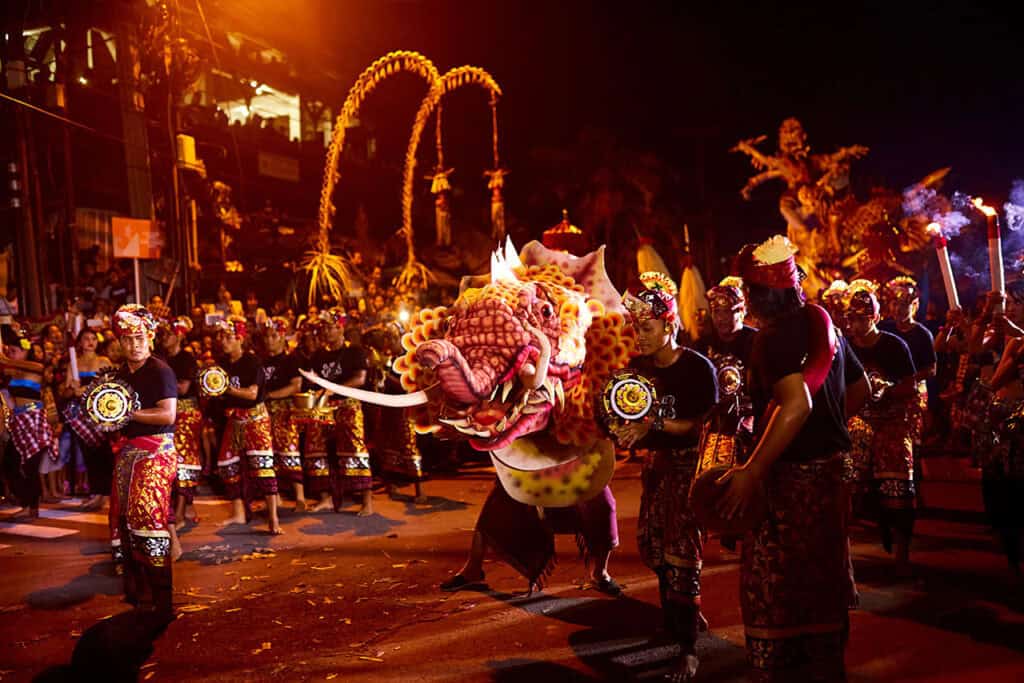
The day before Nyepi – called Pengerupukan – is the complete opposite of the silence that follows. Villages across Bali hold processions featuring giant demon-like effigies called Ogoh-Ogoh.
These elaborate papier-mache figures can be several meters tall, and they’re the result of weeks or even months of community craftsmanship. On the eve of Nyepi, they’re paraded through the streets with loud music, chanting, and torchlight before being burned — symbolically purging evil spirits from the island before the new year begins.
If you’re in Bali for Nyepi, don’t miss the Ogoh-Ogoh parade. It’s one of the most visually striking cultural events on the island.
The Four Rules of Nyepi
During the 24-hour observance, Balinese Hindus follow four principles known as Catur Brata Penyepian:
- Amati Geni – no fire, no lights
- Amati Karya – no working
- Amati Lelungan – no traveling or leaving the home
- Amati Lelanguan – no entertainment or pleasure
These aren’t just suggestions. The island takes Nyepi seriously, and community security groups called Pecalang patrol the streets to enforce the silence.
What This Means for Tourists
If you’re staying in Bali on Nyepi, there are a few things you need to know:
You must stay in your accommodation. You can’t walk outside, drive, or go to the beach. This applies to tourists too. The Pecalang will ask you to go back inside if you step out.
The airport closes. Ngurah Rai International Airport shuts down for the full 24-hour period. No flights in, no flights out. If you’re arriving or departing on Nyepi day, you’ll need to reschedule.
Most businesses are closed. Restaurants, convenience stores, shops – essentially everything is shut. Your hotel or villa will still be operating and will typically provide meals, but don’t count on going out.
Lights and noise should be minimized. Some hotels draw curtains or ask guests to keep lights low and noise down, especially near open windows or balconies.
Internet may be restricted. In recent years, mobile data has been blocked across the island during Nyepi. WiFi at your hotel should still work, but don’t rely on your phone’s data plan.
Practical Tips If You’re in Bali for Nyepi
- Stock up the day before. Grab snacks, drinks, and anything else you need before Nyepi starts. Minimarkets and shops close early on Pengerupukan.
- Check your hotel’s Nyepi policy. Most hotels are well-prepared and will brief guests in advance. Some offer special dinners or activities to make the day enjoyable.
- Bring a book or download entertainment offline. It’s actually a great forced slow-down day. Lean into it.
- Don’t try to fight it. Attempting to move around or travel will cause problems. Respect the rules and the culture.
Should You Plan Around Nyepi?
That depends on what you want out of your trip. If you’re only in Bali for a few days and Nyepi eats one of them, it might feel limiting. But if you have a bit of flexibility, experiencing Nyepi is genuinely special – there’s nowhere else in the world where an entire island goes quiet like this.
The combination of the Ogoh-Ogoh parade the night before and the profound stillness of Nyepi day itself is something most travelers never forget. For many, it ends up being a highlight of the trip.